The digital revolution is no longer knocking on the courthouse door; it has instead entered the chamber. Artificial intelligence, once a concept from science fiction, is now a tangible force reshaping many professions. Consequently, the legal field is experiencing a significant transformation. The integration of Generative AI in courts is sparking a critical dialogue among judges, lawyers, and policymakers. This technology promises to enhance efficiency, streamline complex research, and even broaden access to justice for many people.
However, this rapid advancement also brings forth unprecedented challenges. How can judicial systems ensure fairness and transparency when algorithms assist in legal analysis? What new standards are required for evidence generated or assessed by AI? Furthermore, as we embrace these tools, we must address the ethical considerations and potential biases embedded within them. This article explores this evolving landscape by examining how courts navigate these complex issues. It also delves into emerging frameworks that govern the responsible use of AI, ensuring technology serves justice without compromising its foundational principles.
The Dual Role of Generative AI in Courts: Benefits and Challenges
The introduction of Generative AI in courts presents a classic case of technological dualism, offering substantial advancements while simultaneously posing significant risks. On one hand, AI tools have the potential to revolutionize judicial processes, making them more efficient and accessible. On the other, they raise complex ethical and legal questions that demand careful consideration from legal professionals. Organizations like the National Center for State Courts are actively developing resources to help the judiciary navigate this new terrain, emphasizing a balanced approach to adoption. The key lies in harnessing the benefits while establishing robust guardrails to mitigate the challenges.
Potential Benefits
- Enhanced Efficiency: AI can automate repetitive and time consuming tasks, such as legal research, document review, and case summarization. For instance, an AI tool could analyze thousands of pages of discovery documents in a fraction of the time it would take a legal team, freeing up human practitioners to focus on more strategic aspects of a case.
- Improved Accuracy: By minimizing the potential for human error in data processing and legal research, generative AI can improve the overall accuracy of legal work. These tools can quickly identify relevant precedents and statutes that a human researcher might overlook.
- Broader Access to Justice: AI-powered tools can provide affordable legal information and self help resources to individuals who cannot afford traditional legal services. This includes guiding users through simple legal processes or helping them draft basic legal documents.
Inherent Challenges
- Ethical and Bias Concerns: AI models are trained on vast datasets, which may contain historical biases. If not properly addressed, these biases can be perpetuated or even amplified, leading to unfair outcomes. Transparency in how these algorithms work is crucial to building trust and ensuring accountability.
- Legal and Evidentiary Standards: A major hurdle is determining the admissibility of AI generated evidence. Courts must apply established principles of authentication and reliability to machine generated materials, which often requires a deep understanding of the AI’s processes and limitations.
- Accountability and Oversight: The American Bar Association has reaffirmed that lawyers retain full responsibility for the accuracy of their filings, even when using AI assistance. Therefore, meaningful human oversight is essential to validate AI outputs and ensure they meet professional standards.
Navigating the Legal and Ethical Maze of AI in Law
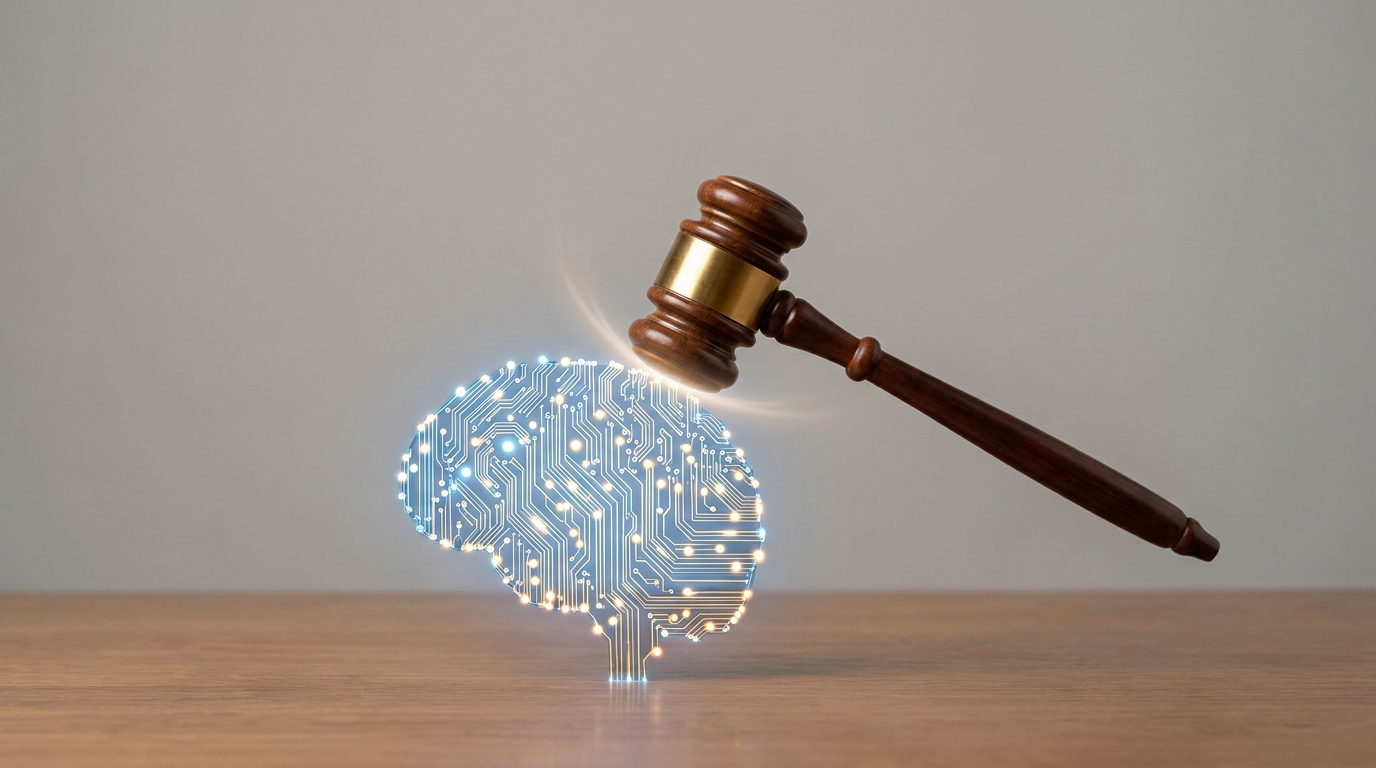
The integration of generative AI into the judicial system is not merely a technological upgrade; it is a paradigm shift that carries profound legal and ethical implications. As courts begin to adopt these powerful tools, they must simultaneously erect a framework of principles and regulations to uphold the integrity of justice. The core challenges revolve around data privacy, algorithmic bias, and the fundamental need for transparency in decision making processes.
Upholding Data Privacy and Confidentiality
One of the most immediate concerns is the protection of sensitive legal information. When lawyers or court staff use AI platforms, they risk exposing confidential client data or sealed court records. Therefore, robust privacy protections are essential. This includes using AI systems with strong data encryption and clear policies on data usage. Access to justice initiatives that employ AI are increasingly pairing them with strict privacy guardrails to protect vulnerable users.
Confronting Algorithmic Bias
Generative AI models learn from existing data, which can reflect societal biases. If an AI is trained on historical case data that contains racial or gender biases, it may perpetuate those prejudices in its outputs. Consequently, this could lead to discriminatory outcomes in legal analysis or research. To counter this, bodies like the National Institute of Standards and Technology are developing standards for AI risk management, emphasizing the need for continuous testing and validation to identify and mitigate bias.
Demanding Transparency and Accountability
For AI to be trusted in a legal setting, its reasoning must be understandable. This principle of transparency is challenging, as many advanced AI models operate as “black boxes.” Legal ethics advisors stress that any algorithmic assistance must be reviewable and anchored to the facts of the case. Furthermore, bar regulators are making it clear that lawyers are ultimately responsible for the work they submit, regardless of whether it was drafted with AI assistance. This underscores the irreplaceable role of human oversight and professional judgment in the legal field.
Traditional vs. AI-Enhanced Court Processes: A Comparative Look
To better understand the transformative impact of generative AI on the judiciary, the following table compares key aspects of traditional court processes with their AI-enhanced counterparts. The comparison highlights the significant shifts in efficiency, accuracy, transparency, and cost that are currently reshaping legal practices.
| Feature | Traditional Court Processes | AI-Enhanced Court Processes |
|---|---|---|
| Speed & Efficiency | Relies on manual legal research, document review, and case management, which is often slow and labor-intensive. | Automates and accelerates tasks like research and document analysis, which significantly reduces processing times. |
| Accuracy | Dependent on individual human expertise and attention to detail, making it susceptible to human error and oversight. | Can process and cross-reference vast amounts of information with high precision, but outputs must be verified to avoid AI errors or fabrications. |
| Transparency | Judicial reasoning is conducted by humans and is, in principle, explainable through written opinions and oral arguments. | AI decision-making can be opaque, creating challenges for accountability. This requires a move towards explainable AI for greater trust. |
| Cost | High costs are primarily driven by billable hours for legal professionals performing research, drafting, and administrative tasks. | May reduce operational costs by automating routine work, though it requires a significant initial investment in software and training. |
The journey of integrating Generative AI in courts is only just beginning, yet it is already clear that this technology will have a lasting impact on the legal landscape. The promise of greater efficiency, enhanced accuracy, and broader access to justice is compelling. However, these potential benefits are intrinsically linked with significant ethical and legal challenges. Issues of algorithmic bias, data privacy, and the need for transparency are not mere technical hurdles; they strike at the heart of what it means to administer justice fairly and equitably. As this article has explored, the legal community is actively grappling with these complexities, working to establish new standards for a new era of law.
Moving forward, the path to responsible AI adoption requires a delicate balance. It is a tightrope walk between embracing innovation and upholding the timeless principles of justice. The future will undoubtedly bring more sophisticated AI tools and, in response, more refined regulatory frameworks from legal authorities worldwide. The ultimate goal must be to create a symbiotic relationship where technology serves as a powerful aid to human judgment, not a replacement for it. Therefore, a cautious and considered approach, prioritizing human oversight and ethical guardrails, is not just recommended—it is essential for ensuring that justice in the digital age remains fundamentally human.
Frequently Asked Questions (FAQs)
Is it legal to use generative AI for court filings and legal research?
Yes, it is generally legal to use generative AI in legal practice, but its use is becoming increasingly regulated. Courts and bar associations across various jurisdictions are issuing specific guidance on this matter. A common requirement is the disclosure of AI assistance in legal filings to ensure transparency for all parties and the court. Furthermore, these guidelines emphasize that while AI can be a powerful tool for drafting and research, the human lawyer remains entirely responsible for the final work product. This means every piece of information, every citation, and every legal argument generated by an AI must be meticulously verified by the attorney of record before being submitted to the court. The technology is considered an aid, not an autonomous legal professional, and its use must comply with existing rules of professional conduct.
How do courts ensure that AI-generated information is reliable and accurate?
Courts are applying long-standing evidentiary principles to assess the reliability of AI-generated materials. When machine-generated content is presented as evidence or used to support a legal argument, it must meet standards of authentication and reliability, just like any other piece of evidence. Judges often require the party presenting the AI-generated information to document the tool’s process, explain how the output was produced, and provide reasons why it should be considered dependable. As evidence scholars emphasize, the burden of proof falls on the user. Moreover, the necessity of meaningful human oversight is consistently stressed. A lawyer cannot simply trust the AI’s output; they must independently corroborate its findings and be prepared to defend its accuracy.
What is being done to address the risk of bias in legal AI systems?
Addressing algorithmic bias is a critical priority for the responsible integration of AI in the legal field. Generative AI models are trained on vast datasets of existing text, which can include historical data reflecting societal biases. To combat this, organizations like the National Institute of Standards and Technology (NIST) are developing comprehensive AI risk management frameworks. These frameworks encourage developers and users to conduct rigorous testing, validation, and auditing to identify and mitigate potential biases. Additionally, a strong emphasis is placed on transparency. Legal ethics advisors argue that any algorithmic assistance in judicial decision-making must be transparent and reviewable, allowing judges and lawyers to understand the data and logic behind an AI’s output and critically assess it for potential prejudice.
Will AI replace lawyers and judges in the courtroom?
It is highly unlikely that AI will replace lawyers and judges. The prevailing view among legal experts is that AI should function as a tool to augment, not replace, human intelligence. While AI can automate repetitive tasks such as document review, legal research, and case summarization, it currently lacks the capacity for nuanced strategic thinking, ethical reasoning, empathy, and the complex human judgment that are central to the legal profession. Judicial decision-making is fundamentally a human function. The role of AI is to handle data-intensive tasks, thereby freeing up legal professionals to focus on higher-value work like client counseling, negotiation, and courtroom advocacy. The model is one of collaboration, where technology supports human experts to achieve better outcomes.
Who is legally responsible if a generative AI tool makes a significant error in a court case?
The responsibility for errors made by a generative AI tool rests squarely on the human user. Professional bodies, including the American Bar Association, have been unequivocal in reaffirming that lawyers retain full professional responsibility for the accuracy of their filings and the soundness of their legal counsel. If an AI generates a fabricated case citation (a known issue referred to as a “hallucination”) or produces a flawed legal argument, the lawyer who submits that work is accountable for the error and any resulting professional consequences. This principle of ultimate human accountability ensures that there is always a clear line of responsibility and reinforces the importance of diligent verification and critical oversight when using any AI-assisted legal technology.
The information provided here constitutes general and non-binding legal information that makes no claim to be current, complete, or accurate. All non-binding information is provided exclusively as a public and free service and does not establish a client-attorney or consulting relationship. For further information or specific legal advice, please contact our law firm directly. We therefore assume no guarantee for the topicality, completeness, and correctness of the provided pages and content.
Any liability claims relating to damages of a non-material or material nature caused by the publication, use, or non-use of the information presented, or by the publication or use of incorrect or incomplete information, are fundamentally excluded, provided there is no demonstrable willful intent or grossly negligent conduct. For additional information and contact, please refer to our Legal Notice (Impressum) and Privacy Policy.