
Navigating the New Frontier: How the Unitary Patent System is Redefining European Innovation
How can businesses protect their inventions across Europe with a single, unified approach? For many years, securing patent rights in the European market required managing a complex and often costly patchwork of national systems. This fragmented landscape, however, has undergone a monumental transformation, marking the most significant change to European patent law in decades. The introduction of the new Unitary Patent System alongside the Unified Patent Court (UPC) has created a streamlined pathway for innovation protection.
This new framework offers a single patent that provides uniform protection across most participating EU member states. As a result, it simplifies administration and alters the financial calculations for maintaining a broad European patent portfolio. For Austrian and other EU rights holders, this system presents both powerful opportunities and considerable risks. It reshapes everything from initial registration and portfolio strategy to cross border enforcement. Therefore, understanding this new system is not just an option; it is a critical strategic necessity for any company looking to safeguard its intellectual property in the modern European economy.
An Overview of the Unitary Patent System
The Unitary Patent System represents a fundamental shift in how intellectual property is protected across the European Union. Before its introduction, a European patent granted by the European Patent Office (EPO) had to be validated and maintained individually in each member state where protection was sought. This process resulted in a bundle of national patents, each subject to different renewal fees, translation requirements, and litigation rules. The new system simplifies this dramatically. Now, inventors can obtain a single, uniform patent right that covers most of the EU, creating a more cohesive and accessible framework for innovation.
Core Mechanics of the Unitary Patent System
At its core, the Unitary Patent System allows a European patent to have “unitary effect,” meaning it provides one indivisible layer of protection across all participating countries. This is not an automatic process; after a European patent is granted, the patent holder must actively request unitary effect within one month. The administration remains centralized at the EPO, which manages the registration and renewal of these patents.
Key features and benefits of this system include:
- Uniform Geographic Coverage: A single Unitary Patent provides consistent protection across all participating EU Member States that have ratified the UPC Agreement.
- Centralized Administration: The entire process, from grant to renewal, is handled by the European Patent Office, eliminating the need to manage multiple national patent offices.
- Simplified Renewals: Instead of paying separate renewal fees in each country, a single annual fee is paid directly to the EPO.
- Reduced Translation Costs: For many patents, the translation requirements are significantly reduced compared to the classical system, lowering administrative burdens.
Strategic Significance for European Businesses
The introduction of the Unitary Patent System has profound strategic implications. For businesses, especially small and medium-sized enterprises (SMEs), it lowers the barrier to obtaining broad patent protection throughout the EU. The cost savings on renewals and translations can be substantial, making it more feasible to protect inventions in a larger market. Furthermore, this system is intrinsically linked to the Unified Patent Court (UPC), which provides a single forum for patent litigation across member states. This combination offers a more predictable and efficient mechanism for enforcing patent rights, but it also centralizes the risk, as a single court action could invalidate a patent across the entire territory. Therefore, companies must carefully weigh the advantages of streamlined protection against the potential for a single point of failure.
The Strategic Calculus: Advantages and Challenges of the Unitary Patent System
The Unitary Patent System offers a streamlined and potentially more cost-effective route for protecting innovations across Europe. However, this simplicity comes with its own set of risks and strategic trade-offs. For patent holders, the decision to opt for a Unitary Patent requires a careful evaluation of its dual nature, balancing significant benefits against considerable risks.
Key Advantages of the System
The benefits of the new system are compelling, particularly for organizations seeking broad and efficient protection. These advantages are detailed by the European Patent Office and represent a major shift in patent strategy.
- Significant Cost Reduction: One of the most celebrated advantages is the reduction in costs. By consolidating renewal fees into a single annual payment, the system eliminates the need to pay individual fees in multiple countries. This can make maintaining broad protection for 10 years cost less than EUR 5,000, which is substantially lower than the cumulative national fees under the previous system.
- Administrative Simplicity: The system drastically reduces administrative burdens. There is no need for complex validation procedures in each country, and translation requirements are minimized. This centralized management simplifies portfolio management, consequently saving both time and resources.
- Uniform Protection and Enforcement: A Unitary Patent ensures that the scope of protection is identical across all participating member states. This uniformity is paired with the power of the Unified Patent Court (UPC), which can issue decisions, including injunctions, that apply across the entire territory. As a result, this allows for powerful, pan-European enforcement from a single legal action.
Potential Challenges and Limitations
Despite its clear benefits, the Unitary Patent System is not without its challenges. The primary drawbacks stem from the same centralization that makes it so attractive.
- Central Revocation Risk: The most significant risk is the “all-or-nothing” nature of the system. A single successful revocation action at the UPC can invalidate the patent across all participating countries simultaneously. This contrasts sharply with the classical system, where a patent would have to be challenged and revoked in each national court individually.
- Inflexible Geographic Coverage: The Unitary Patent provides protection only in the EU member states that have ratified the UPC Agreement. It is not possible to select a smaller subset of these countries to reduce costs. Therefore, if a patent holder only needs protection in a few key markets, the traditional route of validating a European patent in those specific countries may still be more economical.
- Loss of National Court Advantages: Litigating in national courts can sometimes be advantageous, perhaps due to favorable local precedents or procedures. By choosing a Unitary Patent, holders are bound to the jurisdiction of the new and still-developing UPC, forgoing the option to litigate in familiar national forums.
Ultimately, the decision to use the Unitary Patent System is a strategic one. Businesses must weigh the considerable cost and administrative savings against the heightened risk of a single, devastating revocation action.
At a Glance: Unitary Patent vs. Traditional European Patent
To better understand the strategic implications of the new system, it is helpful to compare it directly with the classical European patent framework. The following table highlights the key differences between the two approaches, offering a clear overview for patent holders weighing their options.
| Feature | Unitary Patent System | Traditional European Patent (Bundle of National Patents) |
|---|---|---|
| Geographic Coverage | Provides uniform protection across all participating EU member states as a single, indivisible right. | Offers a flexible choice of protection in desired countries, creating a bundle of national rights. |
| Renewal Fees & Costs | A single annual renewal fee is paid to the EPO, generally more cost-effective for broad coverage (4+ countries). | Separate renewal fees must be paid to each national patent office, with costs scaling per country. |
| Enforcement & Litigation | Centralized enforcement through the Unified Patent Court (UPC), with one lawsuit providing a pan-European ruling. | Requires separate litigation in each national court, leading to multiple parallel proceedings. |
| Revocation Risk | Centralized risk: a single action in the UPC can revoke the patent across the entire territory. | Decentralized risk: the patent must be challenged and invalidated in each country individually. |
| Administration | Simplified and centralized through the EPO. Translation requirements are significantly reduced. | Involves complex management across multiple national patent offices with extensive translation needs. |
| Flexibility | Inflexible; the patent is a single block and cannot be selectively dropped in certain countries. | Highly flexible; rights can be abandoned on a country-by-country basis to manage costs. |
The Future is Unified: Embracing the New European Patent Landscape
The arrival of the Unitary Patent System and the Unified Patent Court marks a pivotal moment for innovation in Europe. It fundamentally reshapes the strategies available to patent holders, offering a streamlined, cost-effective path to broad protection. For businesses seeking to safeguard their inventions across the EU, the benefits are clear: reduced administrative complexity, lower renewal costs, and the power of pan-European enforcement through a single court action. This unified approach simplifies what was once a fragmented and expensive process.
However, this efficiency comes with a significant strategic trade-off. The centralization of power in the Unified Patent Court introduces the critical risk of a single revocation action nullifying a patent across all member states. This “all-or-nothing” proposition requires careful consideration. The decision is no longer about if you protect, but how. Choosing between the flexibility of the traditional system and the streamlined power of the Unitary Patent will depend on your specific commercial goals, budget, and appetite for risk.
Ultimately, the Unitary Patent System is more than just a new legal framework; it is a catalyst for a new era of strategic intellectual property management. Austrian and EU businesses now have a powerful tool to leverage, but it must be wielded with foresight and precision. The path forward requires a proactive approach—evaluating patent portfolios, adapting enforcement strategies, and embracing the opportunities this transformative system presents to secure a competitive edge in the European market.
Frequently Asked Questions (FAQs)
To help clarify some of the common points of discussion around this new framework, here are answers to frequently asked questions about the Unitary Patent System.
What is a Unitary Patent and how does it differ from a traditional European Patent?
A Unitary Patent is a single, indivisible patent that provides uniform protection across all participating EU member states. This is different from a traditional European Patent, which, once granted by the European Patent Office (EPO), becomes a “bundle” of individual national patents that must be validated and maintained in each country separately. With a Unitary Patent, there is one renewal fee, one legal framework, and one central point of administration for the entire territory.
How can a patent holder obtain a Unitary Patent?
The process begins with a standard application for a European patent. After the EPO grants the patent, the owner has a one-month period to file a formal “request for unitary effect.” This is a simple administrative step that converts the granted European patent into a Unitary Patent covering all participating states. If the owner does not file this request, they must follow the traditional path of validating the patent in each desired country individually to secure protection.
Is the Unitary Patent always the cheaper option?
Not always. The cost-effectiveness of the Unitary Patent System depends on your strategic needs. Its renewal fees are structured to be equivalent to the combined fees of the top four most popular validation countries. Therefore, if you need protection in four or more participating countries, the Unitary Patent is almost always the more economical choice. However, if your commercial interests are limited to only two or three countries, the traditional approach of selective national validation may be less expensive.
Which countries are covered by the Unitary Patent?
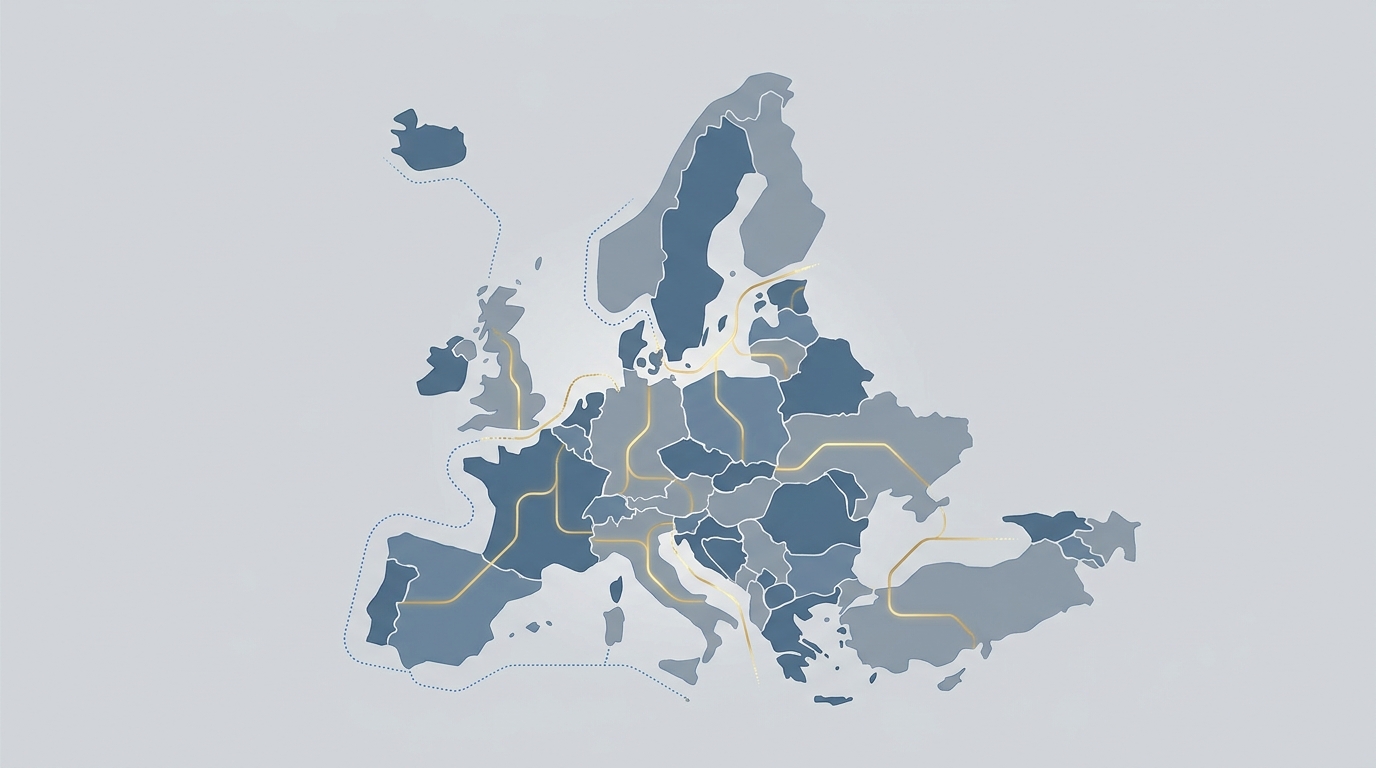
The Unitary Patent covers the EU member states that have ratified the Unified Patent Court (UPC) Agreement. Currently, this includes 17 countries, featuring major markets like Germany, France, Italy, and the Netherlands. The geographic scope is fixed and will expand as more EU states ratify the agreement. It’s important to remember that non-participating EU countries (like Spain) and non-EU countries (like the UK or Switzerland) are not covered and still require separate national patents.
What is the single biggest risk of using the Unitary Patent System?
The primary risk is its “all-or-nothing” nature concerning litigation. Because it is a single right, a Unitary Patent can be invalidated across all participating countries through a single successful revocation action at the Unified Patent Court. This centralizes the risk, as opposed to the traditional system where a patent must be challenged and revoked in each national jurisdiction separately, offering more resilience against a complete loss of protection.
The information provided here constitutes general and non-binding legal information that makes no claim to be current, complete, or accurate. All non-binding information is provided exclusively as a public and free service and does not establish a client-attorney or consulting relationship.
For further information or specific legal advice, please contact our law firm directly. We therefore assume no guarantee for the topicality, completeness, and correctness of the provided pages and content. Any liability claims relating to damages of a non-material or material nature caused by the publication, use, or non-use of the information presented, or by the publication or use of incorrect or incomplete information, are fundamentally excluded, provided there is no demonstrable willful intent or grossly negligent conduct.
For additional information and contact, please refer to our Legal Notice (Impressum) and Privacy Policy.