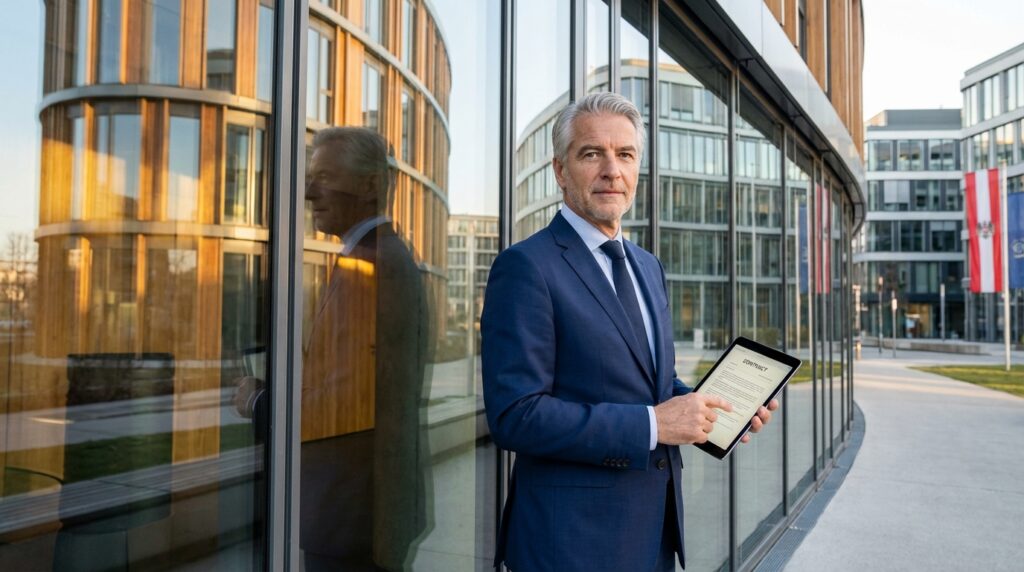
A major real estate deal has reshaped Vienna’s property landscape.
The UniCredit Bank Austria headquarters acquisition stands out as one of the most significant transactions in Austria this year. This move involves the prominent property at Rothschildplatz 1, located within the modern Austria Campus. It consequently signals a major strategic shift for the financial institution.
Previously, UniCredit Bank Austria was a tenant in its own headquarters. However, the bank has now purchased the building from asset manager PGIM. This acquisition is a key part of the bank’s new strategy. As a result, the institution is focusing on strengthening its portfolio of owner-occupied properties. These properties are essential for its core operational activities.
This article explores the details of this landmark transaction. We will examine the strategic motivations behind the bank’s decision to buy its headquarters. Furthermore, the discussion will cover the complex legal and regulatory hurdles involved. This includes the extensive due diligence, contract negotiations, and antitrust filings necessary for the purchase.
Unpacking the UniCredit Bank Austria Headquarters Acquisition
The UniCredit Bank Austria headquarters acquisition is a landmark event in the Austrian real estate market. UniCredit Bank Austria, a leading financial institution in the country, has long operated from its headquarters at Rothschildplatz 1 in Vienna. This modern building is a central part of the well-known Austria Campus. For years, the bank was a tenant in this very property, which houses its primary operational activities. The decision to purchase the building from the asset manager PGIM marks a significant change in its real estate strategy.
This transaction is far more than a simple property purchase; it represents a strategic reorientation for the bank. The core motivation behind the acquisition is to strengthen the portfolio of owner-occupied properties that are crucial for the bank’s daily operations. By transitioning from tenant to owner, UniCredit Bank Austria gains greater control over its long-term operational stability and asset management. Consequently, this move is viewed as one of the most substantial real estate deals in Austria for the year, reflecting a broader trend of corporations securing key operational assets.
The acquisition solidifies the bank’s physical presence and commitment to its Vienna headquarters. Moreover, it underscores a strategic decision to invest in tangible assets that support its core banking functions. This shift towards ownership of operationally vital real estate is a noteworthy development within the Austrian banking sector, potentially signaling a move towards more conservative, asset-backed corporate strategies. The deal’s complexity required extensive legal and financial groundwork to ensure a successful transition.

Ripple Effects of the UniCredit Bank Austria Headquarters Acquisition
The UniCredit Bank Austria headquarters acquisition extends its influence far beyond the parties directly involved. This significant transaction has created notable effects on Vienna’s real estate market, the local economy, and the bank’s own strategic standing. The decision to purchase rather than lease has several important implications.
- Vienna’s Real Estate Market: As one of the largest real estate deals of the year, this acquisition injects confidence into the commercial property sector. It underscores the high value of prime office locations like the Austria Campus. Consequently, the transaction could positively influence property valuations and attract further investment in the surrounding area.
- Local Economic Stability: A transaction of this magnitude signals long term commitment from a major financial institution to its Vienna hub. This commitment can bolster economic confidence and showcases Vienna as a stable and attractive location for major corporate headquarters.
- UniCredit Bank Austria’s Strategic Positioning: By purchasing its headquarters, the bank enhances its operational stability. It eliminates the uncertainties and costs associated with leasing. This move aligns with its strategic goal of strengthening its portfolio of owner occupied properties. As a result, the bank solidifies its asset base and gains greater control over a critical operational facility, reinforcing its foundation in the Austrian financial industry.
At a Glance: Key Acquisition Details
| Stakeholder | Role | Transaction Details | Significance |
|---|---|---|---|
| UniCredit Bank Austria | Buyer | Acquired its headquarters at Rothschildplatz 1, Vienna. The transaction was one of the largest of the year. | Fulfills a strategic reorientation to own key operational properties, ensuring long-term stability. |
| PGIM | Seller | The asset manager who sold the property to UniCredit Bank Austria. | A major divestment of a prime real estate asset on the Austria Campus. |
| Freshfields | Legal Advisor | Advised UniCredit Bank Austria on all legal aspects, from due diligence to antitrust filings. | Facilitated the complex legal framework of this high-value real estate transaction. |
A Strategic Milestone in Austrian Real Estate
The UniCredit Bank Austria headquarters acquisition is a landmark transaction with far-reaching implications. It represents more than just a change of ownership for a prime Vienna property. Instead, it signals a deliberate strategic shift by a major financial institution towards securing its operational foundations. By moving from a tenant to an owner, UniCredit Bank Austria has fortified its asset base and ensured long-term stability for its core activities.
This deal highlights the bank’s commitment to its Vienna headquarters and reflects a broader corporate trend of valuing owner-occupied properties. The successful navigation of complex legal and regulatory requirements further underscores the significance of this acquisition. For the Austrian business environment, it injects confidence into the commercial real estate market and reinforces Vienna’s status as a key financial hub.
As the economic landscape evolves, strategic real estate decisions like this one will continue to shape corporate futures. It will be insightful to observe whether other major corporations follow a similar path. Therefore, keeping a close watch on developments in the commercial property sector remains essential for understanding future business trends.
Frequently Asked Questions (FAQs)
What is the UniCredit Bank Austria headquarters acquisition?
The UniCredit Bank Austria headquarters acquisition refers to the purchase of the property located at Rothschildplatz 1 in Vienna. UniCredit Bank Austria, which had previously been a tenant in the building, bought its headquarters from the seller, asset manager PGIM. The building is a key part of the modern Austria Campus and houses the bank’s central operations.
Why is this real estate transaction considered so significant?
This deal is regarded as one of the most important real estate transactions of the year in Austria due to its scale and strategic implications. It signals a strong commitment from a major financial institution to its Vienna location, which boosts confidence in the local commercial property market. It also highlights a corporate strategy focused on securing long-term control over essential operational assets.
What was the primary motivation for UniCredit Bank Austria to buy its headquarters?
The main driver for the acquisition was the bank’s strategic reorientation. This new strategy focuses on strengthening its portfolio of owner-occupied properties that are vital for its core banking activities. By owning the building, the bank enhances its operational stability, reduces long-term costs associated with leasing, and gains full control over its most important physical asset.
Who were the main stakeholders involved in this deal?
The key parties in this transaction were UniCredit Bank Austria as the buyer and PGIM as the seller. The international law firm Freshfields also played a critical role by providing comprehensive legal advice to UniCredit Bank Austria throughout the process.
What kind of legal challenges were involved in the acquisition?
A high-value transaction like this involves numerous legal complexities. The advisory team managed several critical tasks, including extensive real estate and tax due diligence to assess risks and liabilities. Furthermore, they handled the drafting of all contracts, addressed complex regulatory issues, and managed the mandatory antitrust filing to ensure the acquisition complied with all legal standards.
The information provided here constitutes general and non-binding legal information that makes no claim to be current, complete, or accurate. All non-binding information is provided exclusively as a public and free service and does not establish a client-attorney or consulting relationship. For further information or specific legal advice, please contact our law firm directly. We therefore assume no guarantee for the topicality, completeness, and correctness of the provided pages and content.
Any liability claims relating to damages of a non-material or material nature caused by the publication, use, or non-use of the information presented, or by the publication or use of incorrect or incomplete information, are fundamentally excluded, provided there is no demonstrable willful intent or grossly negligent conduct.
For additional information and contact, please refer to our Legal Notice (Impressum) and Privacy Policy.