
For years, companies operating across the European Union have navigated a complex and often unpredictable regulatory landscape. The enforcement of the General Data Protection Regulation (GDPR) has varied significantly between member states, creating a situation where the same data protection infringement could lead to vastly different outcomes. This inconsistency has posed a significant challenge for multinational organizations seeking to establish coherent, group-wide compliance strategies. The lack of a unified approach meant that legal certainty remained elusive, making risk assessment a difficult exercise.
A pivotal shift is now underway, driven by the ongoing EU harmonization of GDPR enforcement and fine calculation. Spearheaded by the European Data Protection Board (EDPB), these efforts aim to establish a more consistent and predictable framework for all businesses. By standardizing the methodologies for imposing administrative fines and aligning the interpretation of GDPR obligations, regulatory bodies are closing the gaps that previously existed. This move towards harmonization is not merely a procedural update; it fundamentally reshapes how companies must approach their data governance, security, and compliance frameworks from the ground up, demanding a more centralized and risk-based strategy.
The Current Challenges of Inconsistent GDPR Enforcement
Despite the GDPR’s goal of creating a unified data protection framework, its practical application has been anything but uniform. A primary challenge is the significant GDPR enforcement disparity among national Data Protection Authorities (DPAs). Each authority operates with a degree of autonomy, leading to divergent interpretations of key GDPR articles and varying levels of enforcement vigor. For instance, what one DPA considers a minor infringement, another may treat as a serious violation demanding substantial penalties. This inconsistency creates an unpredictable environment where a company’s compliance risk can change dramatically depending on which supervisory authority has jurisdiction.
Furthermore, this problem is compounded by widespread fine calculation inconsistencies. The GDPR provides a framework for fines, setting maximums based on global annual turnover, but it does not prescribe a specific methodology for their calculation. As a result, member states have adopted different models, leading to a lack of transparency and predictability in how penalties are determined. This ambiguity makes it exceptionally difficult for organizations to assess their financial risk and allocate resources for compliance effectively. The absence of a harmonized approach undermines the GDPR’s deterrent effect, as penalties can appear arbitrary.
These issues are most acute in cross-border data protection issues. The one-stop-shop mechanism, intended to streamline enforcement for companies active in multiple EU countries, has often led to complex and prolonged proceedings. Disagreements between the lead supervisory authority and other concerned DPAs can cause significant delays and further complicate the legal landscape. This lack of cohesion not only hinders the effective protection of individuals’ data rights but also imposes a heavy administrative burden on businesses trying to navigate the fragmented regulatory terrain.
The Advantages of a Unified Approach
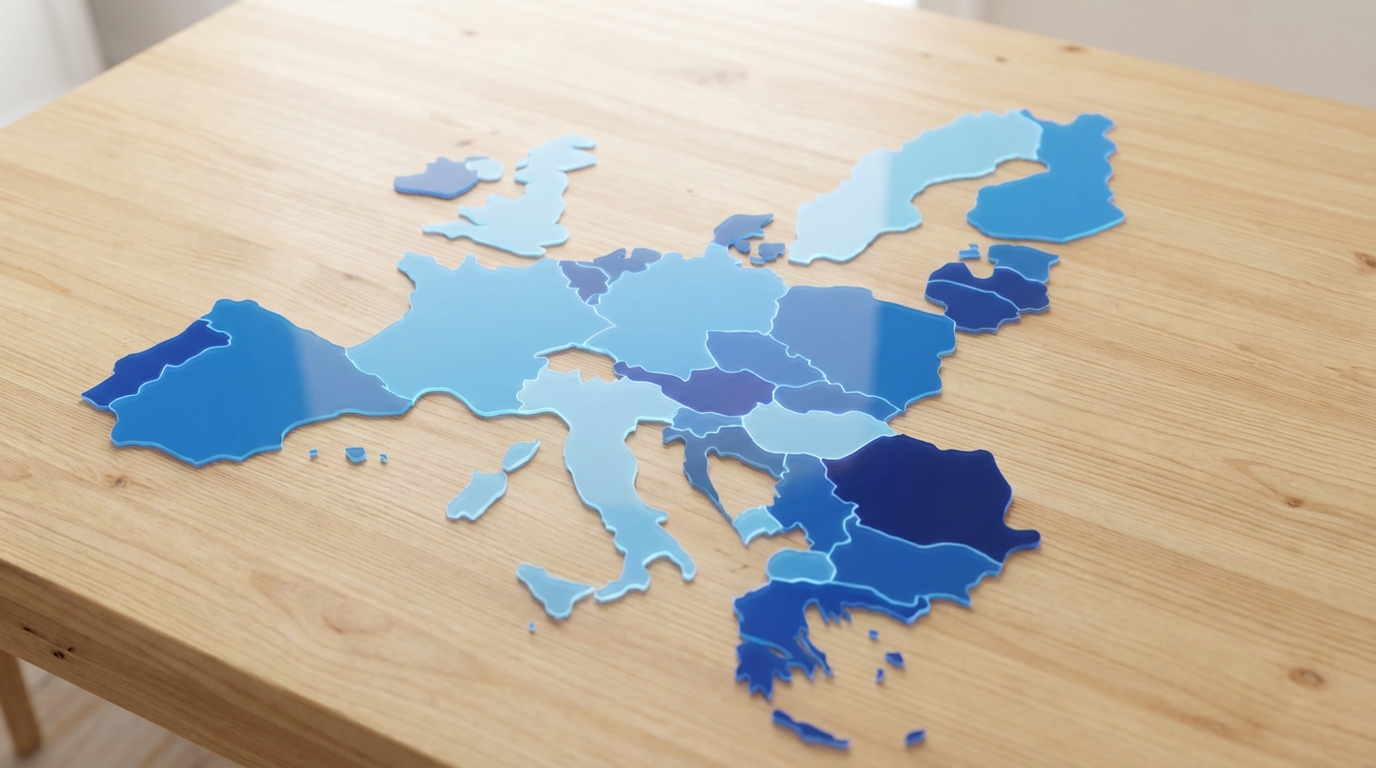
The drive to standardize GDPR enforcement across the EU is a direct response to the challenges of regulatory fragmentation. A harmonized approach promises significant benefits not only for businesses striving for compliance but also for the data subjects the regulation is designed to protect. By creating a more predictable and equitable system, regulatory bodies can foster a climate of legal certainty and trust.
Key Benefits of EU Harmonization of GDPR Enforcement and Fine Calculation
The move towards a standardized regulatory environment offers substantial advantages for both businesses and individuals, replacing ambiguity with clarity and consistency. Key benefits include:
- Increased Legal Certainty: Harmonization provides a clear and predictable legal framework. Consequently, companies can develop and implement compliance strategies with greater confidence, knowing that the rules and potential penalties are consistent across all member states. This reduces legal guesswork and lowers the operational costs associated with navigating a fragmented system.
- Fairness and Proportionality in Fines: A standardized methodology for calculating fines ensures that penalties are applied more equitably. As a result, similar infringements will lead to comparable fines, regardless of where the enforcement action occurs. This promotes a level playing field and reinforces the principle that fines must be proportionate to the violation.
- Enhanced Cross-Border Cooperation: With aligned procedures, cooperation between national supervisory authorities in cross-border cases becomes more efficient. Therefore, the consistency mechanism and the one-stop-shop can function as intended, leading to quicker resolutions and reducing the administrative burden on businesses.
- Stronger Protection for Data Subjects: Ultimately, consistent enforcement ensures that the rights of individuals are upheld uniformly across the EU. When data subjects know that breaches will be handled with the same seriousness everywhere, it builds trust in the digital economy.
A Comparative Look at National Enforcement Approaches
The following table illustrates the diversity in GDPR enforcement and fine calculation methodologies across several key EU member states. These differences underscore the need for the EU harmonization of GDPR enforcement and fine calculation to create a more predictable regulatory environment for businesses operating across the Union.
| Country | Enforcement Authority | Fine Calculation Method | Notable Enforcement Examples |
|---|---|---|---|
| Germany | Federal and State DPAs (DSK) | Utilizes a structured, five-step model based on company turnover and infringement severity. | €35.3 million fine against H&M for employee data monitoring. |
| France | CNIL (Commission Nationale de l’Informatique et des Libertés) | Case-by-case assessment based on GDPR Art. 83(2) criteria, focusing on principles of proportionality. | €50 million fine against Google for lack of transparency and valid consent. |
| Ireland | DPC (Data Protection Commission) | Adheres to GDPR Art. 83(2) criteria, with final fine amounts often influenced by the EDPB’s consistency mechanism. | €1.2 billion fine against Meta for unlawful data transfers to the U.S. |
| Spain | AEPD (Agencia Española de Protección de Datos) | Relies on GDPR Art. 83(2) and is known for a high volume of fines across various sectors. | Fines against major telecom and banking companies for unlawful data processing. |
| Netherlands | AP (Autoriteit Persoonsgegevens) | Applies its own published guidelines with baseline fine amounts for different categories of violations. | €750,000 fine against TikTok for violating children’s privacy. |
Conclusion: Paving the Way for a Unified Data Protection Future
The journey toward a truly harmonized application of the GDPR has been complex, marked by significant enforcement disparities and inconsistent fine calculation methods across the European Union. These challenges have created a fragmented landscape, imposing legal uncertainty on businesses and resulting in uneven protection for individuals. However, the tide is turning. The ongoing efforts to advance the EU harmonization of GDPR enforcement and fine calculation represent a critical step toward realizing the regulation’s core objective: a single, unified standard for data protection.
For businesses, the benefits of this shift are undeniable. Increased legal certainty allows for more effective and efficient group-wide compliance strategies, reducing the risks associated with regulatory ambiguity. A predictable framework for fines ensures fairness and proportionality, enabling better financial planning and risk management. For data subjects, harmonization guarantees that their fundamental rights are consistently upheld, regardless of where their data is processed. As the European Data Protection Board continues to issue guidelines and promote cooperation among supervisory authorities, the path forward becomes clearer. Supporting these harmonization measures is not just a matter of compliance; it is an investment in a more stable, predictable, and trustworthy digital single market for all stakeholders.
Frequently Asked Questions (FAQs)
What exactly is EU harmonization of GDPR enforcement and fine calculation?
Harmonization refers to the ongoing efforts to ensure that the General Data Protection Regulation (GDPR) is applied and enforced consistently across all European Union member states. Currently, national Data Protection Authorities (DPAs) often interpret GDPR obligations differently and use varied methodologies to calculate fines. The goal of harmonization, led by the European Data Protection Board (EDPB), is to create a unified framework. This involves establishing common criteria for imposing administrative fines and aligning the legal interpretations of the regulation to ensure that similar infringements are met with comparable penalties, regardless of where they occur.
How does a harmonized approach benefit a company operating in multiple EU countries?
For multinational companies, harmonization brings significant advantages. The primary benefit is increased legal certainty. With consistent enforcement and predictable fine calculations, businesses can develop and implement a single, coherent, group-wide compliance strategy. This simplifies risk management and reduces the administrative burden of navigating a fragmented regulatory landscape. It also creates a level playing field, ensuring that competitors are subject to the same standards and potential penalties, which fosters fairer competition within the EU’s digital single market.
Will harmonized fine calculations automatically lead to higher penalties?
The objective of harmonization is not necessarily to increase or decrease the overall level of fines, but to make them more consistent, transparent, and proportionate. A standardized methodology ensures that fines are calculated based on a clear set of criteria, such as the nature, gravity, and duration of the infringement, as well as the size of the organization. The focus is on predictability and fairness. As a result, companies will be better able to assess their potential financial exposure for non-compliance, as the penalty will be less dependent on the specific DPA handling the case.
What is the role of the European Data Protection Board (EDPB) in this process?
The EDPB is central to the harmonization efforts. It is composed of representatives from all national DPAs and the European Data Protection Supervisor (EDPS). The EDPB’s primary role is to ensure the consistent application of the GDPR. It does this by issuing binding decisions in cross-border cases where DPAs disagree, thereby resolving disputes. Furthermore, the EDPB publishes official guidelines on the interpretation of GDPR provisions and the methodology for setting administrative fines, which serve as a common reference point for all supervisory authorities.
How does harmonization improve the ‘one-stop-shop’ mechanism?
The ‘one-stop-shop’ mechanism allows companies engaged in cross-border data processing to deal with a single lead supervisory authority. Harmonization is crucial for this system to function effectively. When all DPAs adhere to the same enforcement principles and fine calculation models, cooperation between the lead authority and other concerned authorities becomes much smoother. This alignment reduces delays and disputes in cross-border cases, leading to more efficient and consistent regulatory outcomes. In essence, harmonization provides the procedural consistency needed to make the one-stop-shop work as intended.
The information provided here constitutes general and non-binding legal information that makes no claim to be current, complete, or accurate. All non-binding information is provided exclusively as a public and free service and does not establish a client-attorney or consulting relationship. For further information or specific legal advice, please contact our law firm directly. We therefore assume no guarantee for the topicality, completeness, and correctness of the provided pages and content.
Any liability claims relating to damages of a non-material or material nature caused by the publication, use, or non-use of the information presented, or by the publication or use of incorrect or incomplete information, are fundamentally excluded, provided there is no demonstrable willful intent or grossly negligent conduct.
For additional information and contact, please refer to our Legal Notice (Impressum) and Privacy Policy.