Understanding Corporate Criminal Liability: Navigating a New Era of Enforcement
In the global business landscape, the risk of corporate misconduct has never been higher. As a result, understanding the principles of corporate criminal liability is no longer just a task for the legal department; it is a critical responsibility for every executive and board member. Companies now operate under intense scrutiny from regulators worldwide. Therefore, a single compliance failure or a rogue employee’s actions can lead to severe penalties, lasting reputational damage, and significant financial losses.
The concept of corporate criminal liability has evolved dramatically in recent years. Historically, it was often difficult to prosecute a company for the criminal acts of its employees. However, the legal framework has shifted significantly. Modern enforcement trends introduce “failure to prevent” offenses, which hold an organization accountable for not having adequate procedures in place to stop bribery, fraud, or other economic crimes. This change consequently places a heavy burden on companies to be proactive in their compliance and defense strategies.
This article explores the changing landscape of corporate criminal liability. We will examine how stricter enforcement and expanding oversight duties are forcing companies to adapt their anti-fraud and anti-corruption defenses. Furthermore, we will discuss the practical steps organizations can take to build effective compliance programs that stand up to regulatory scrutiny. Navigating this complex area is essential for sustainable and ethical business operations in the 21st century.
The Foundations of Corporate Criminal Liability
Corporate criminal liability is a legal principle that holds a corporation or company accountable for criminal acts committed by its employees, agents, or directors. This concept is crucial because it recognizes that a business entity can act and be held responsible, much like an individual. Traditionally, proving a corporation’s “intent” was a legal hurdle. However, modern legal frameworks have established clear standards for attributing the actions and state of mind of individuals to the company they represent. These standards are often detailed in prosecution guidelines, such as those from the U.S. Department of Justice here, especially when the actions are performed within the scope of their employment and for the benefit of the corporation.
Understanding corporate criminal liability is essential for several reasons. Firstly, it moves beyond individual accountability to ensure that the organization itself faces consequences for illegal activities. This encourages a culture of compliance from the top down. Secondly, the penalties can be severe, creating a powerful incentive for companies to implement robust internal controls. The impact of a conviction can extend far beyond financial fines.
Here are some of the most significant consequences for businesses:
- Massive Financial Penalties: Fines can reach millions or even billions of dollars, directly impacting a company’s bottom line and shareholder value.
- Reputational Damage: A criminal conviction can destroy public trust and customer loyalty, which is often more damaging than the financial penalty itself. This can lead to a long-term loss of business and market share.
- Operational Restrictions: Companies may face debarment from public contracts, lose essential licenses, or be subject to independent monitors who oversee their operations. This severely hinders their ability to do business.
- Individual Accountability: Beyond the company itself, executives and board members can face individual criminal charges, including imprisonment, for their role in or failure to prevent misconduct.
For example, if a sales team engages in systematic bribery to win contracts, the company can be charged with corruption. Even if senior leadership was unaware of the specifics, the organization may still be liable if it failed to implement and enforce an effective anti-bribery compliance program. This demonstrates the shift towards proactive prevention as the best defense.
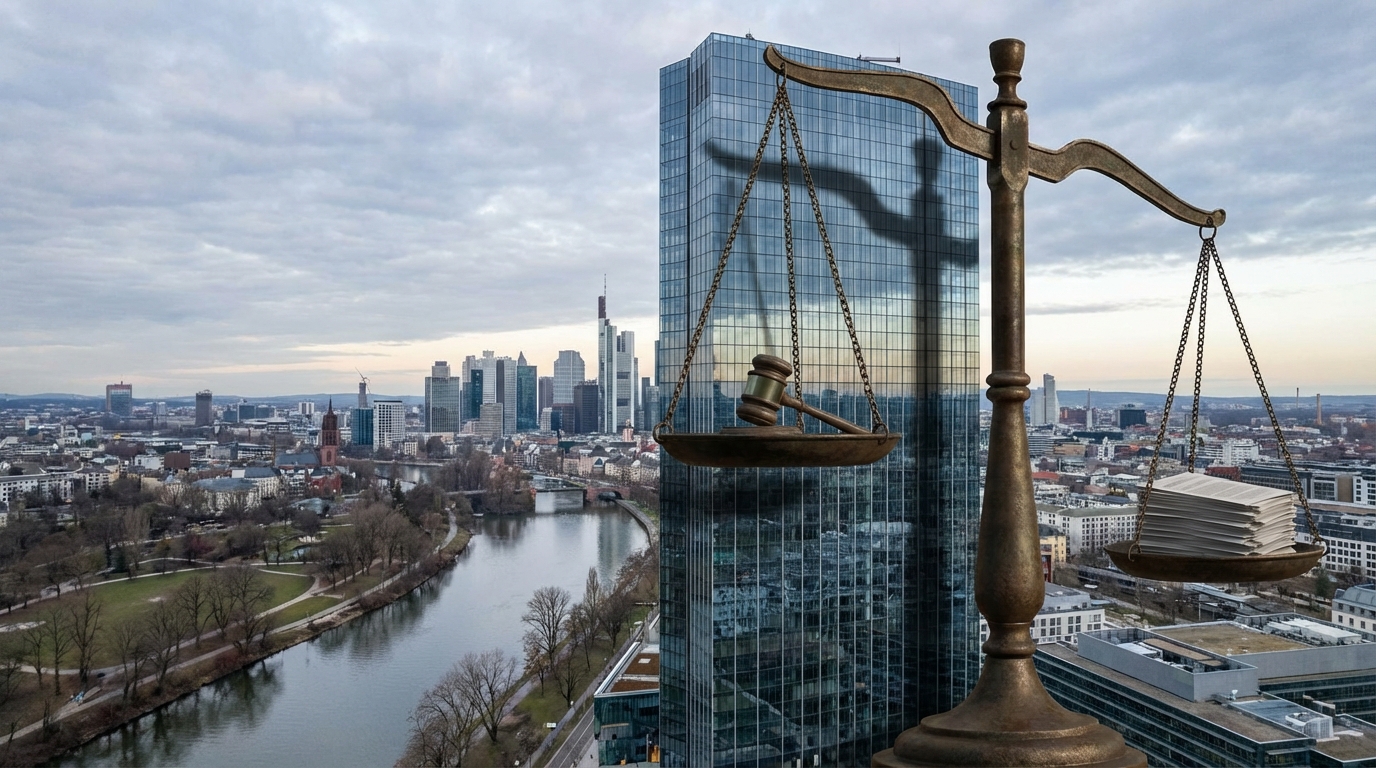
Real World Examples: Landmark Cases in Corporate Crime
To understand the real impact of corporate criminal liability, it is helpful to look at specific cases that have shaped international law and enforcement. These examples highlight the serious consequences of corporate misconduct and demonstrate how regulators hold companies accountable. The offenses often involve complex schemes that cross multiple jurisdictions, leading to coordinated international investigations.
Corporate criminal liability spans a wide range of offenses, but some of the most common and damaging include:
- Bribery and Corruption: Illegally influencing public officials or business partners to gain a commercial advantage.
- Fraud: Deceiving others to cause financial or personal loss, such as accounting fraud or market manipulation.
- Money Laundering: Concealing the origins of illegally obtained money to make it appear legitimate.
- Sanctions Violations: Conducting business with entities or countries prohibited by international sanctions.
One of the most significant bribery cases in history is the Odebrecht scandal. The Brazilian construction giant, Odebrecht S.A., pleaded guilty to a massive bribery scheme. The company admitted to paying nearly $800 million in bribes to government officials across 12 countries to secure public works contracts. As a result, Odebrecht and a subsidiary agreed to pay at least $3.5 billion in global penalties, as announced by the U.S. Department of Justice (Justice Department Announcement). This case set a new precedent for the scale of coordinated international anti-corruption enforcement.
Another landmark case is the 1Malaysia Development Berhad (1MDB) scandal, which involved large-scale fraud and money laundering. Billions of dollars were embezzled from Malaysia’s state-owned investment fund. The stolen money was laundered through complex financial transactions and used to acquire luxury assets worldwide. Global authorities have worked to recover and return these funds. For instance, the U.S. Department of Justice has repatriated over $1.4 billion to Malaysia (Justice Department Announcement). The 1MDB case underscores how seriously authorities are pursuing financial crime and asset recovery, regardless of their complexity or geographic scope.
Corporate Crimes and Legal Consequences in Austria
Under Austrian law, the Corporate Criminal Liability Act (Verbandsverantwortlichkeitsgesetz, VbVG) provides the framework for holding companies accountable for a range of criminal offenses. The potential consequences vary depending on the severity and nature of the crime, as outlined in the table below.
| Type of Corporate Crime | Relevant Austrian Law(s) | Potential Legal Consequences for the Company |
|---|---|---|
| Bribery and Corruption | VbVG, Austrian Criminal Code (StGB) | Corporate fines (can be based on illicit gains), disgorgement of profits, and exclusion from public contracts. |
| Financial and Accounting Fraud | VbVG, StGB, Company Law (UGB/AktG) | Significant fines, liability for damages, and the nullification of financial statements. |
| Antitrust Breaches (Cartels) | Austrian Cartel Act (KartG), EU Law | Fines up to 10% of the company’s annual global turnover and potential private enforcement claims. |
| Environmental Violations | VbVG, StGB, Environmental Laws | Substantial fines, mandatory orders for remediation, and the potential suspension or loss of permits. |
Conclusion: Proactive Compliance as a Cornerstone of Modern Business
In conclusion, the landscape of corporate criminal liability is continually evolving, with global regulators adopting a much stricter enforcement stance. The introduction of “failure to prevent” standards has fundamentally shifted the burden of proof. This makes it imperative for companies to demonstrate proactive compliance. As we have seen, the consequences of failing to do so are not merely financial; they include severe reputational damage, operational restrictions, and individual accountability for corporate leaders. A thorough understanding of corporate criminal liability is, therefore, a cornerstone of modern business strategy and survival.
Effective corporate governance is no longer just about maximizing shareholder value; it is about embedding a culture of integrity and ethical conduct throughout the organization. By investing in robust anti-fraud and anti-corruption defenses, businesses can protect themselves from significant legal and financial risks. Proactive risk management, including continuous monitoring and protected reporting channels, is not an option but a necessity for sustainable success in today’s highly regulated world. Ultimately, prioritizing legal and ethical conduct is the most effective way to safeguard a company’s long term future and reputation.
Frequently Asked Questions (FAQs)
What does the “failure to prevent” standard mean in corporate criminal liability?
The “failure to prevent” standard is a significant legal development that makes a company strictly liable for criminal acts, such as bribery or fraud, committed by its employees or other associated persons. Under this model, the prosecution does not need to prove that the company’s leadership was aware of or intended for the crime to occur. Instead, the offense is the failure to have adequate procedures in place to prevent such misconduct. The only defense is for the company to demonstrate that it had implemented reasonable and effective prevention measures. This standard, adopted in jurisdictions like the United Kingdom, places the responsibility squarely on the corporation to be proactive in its compliance efforts.
Can a company be liable if senior management was unaware of the criminal activity?
Yes, absolutely. Under many legal systems, a company can be held liable for the actions of its employees through the principle of vicarious liability, where the employee acts within the scope of their employment to benefit the corporation. Furthermore, the modern focus on oversight obligations means that a lack of awareness is not a valid defense, especially if it results from weak corporate governance. Regulators expect board members and senior executives to foster a culture of compliance and to implement systems that can detect and deter wrongdoing. A failure to provide this oversight can itself lead to corporate criminal liability.
What is the best defense against corporate criminal liability?
The most effective defense is a proactive and robust corporate compliance program. This is more than just a written policy; it involves a comprehensive, risk-based approach to identifying and mitigating potential misconduct. Key elements include strong leadership from the top, regular risk assessments, clear policies and procedures (especially for high-risk areas like third-party relationships), ongoing training for all employees, and confidential reporting channels for whistleblowers. Documenting all these efforts is crucial because it provides concrete evidence that the company took its prevention duties seriously. Early self-reporting and cooperation with authorities can also significantly mitigate penalties if a violation does occur.
How do enforcement authorities evaluate a company’s compliance program?
Enforcement bodies like the U.S. Department of Justice and the UK Serious Fraud Office look for more than just a “paper” program. They conduct a thorough assessment to determine if the compliance program was well-designed, adequately resourced, and functioning effectively in practice. Prosecutors will ask critical questions: Was the program tailored to the company’s specific fraud and corruption risks? Was it tested and updated regularly? Did employees at all levels receive proper training? And most importantly, how did the company respond when issues were flagged? A program that is not enforced or is easily circumvented will be deemed ineffective, offering little to no protection.
Are individual employees and executives also at risk of prosecution?
Yes. Corporate criminal liability does not shield individuals from personal accountability. In fact, enforcement authorities globally are placing an increased emphasis on prosecuting the individuals responsible for corporate misconduct, including executives and board members who enabled or turned a blind eye to the wrongdoing. An individual can face separate criminal charges that may lead to substantial fines, professional disqualification, and even imprisonment. Holding individuals accountable is seen as a critical deterrent to corporate crime, ensuring that key decision-makers cannot hide behind the corporate veil.
The information provided here constitutes general and non-binding legal information that makes no claim to be current, complete, or accurate. All non-binding information is provided exclusively as a public and free service and does not establish a client-attorney or consulting relationship. For further information or specific legal advice, please contact our law firm directly. We therefore assume no guarantee for the topicality, completeness, and correctness of the provided pages and content.
Any liability claims relating to damages of a non-material or material nature caused by the publication, use, or non-use of the information presented, or by the publication or use of incorrect or incomplete information, are fundamentally excluded, provided there is no demonstrable willful intent or grossly negligent conduct.
For additional information and contact, please refer to our Legal Notice (Impressum) and Privacy Policy.