Austrian Tax Digitalisation: Navigating the Future of Tax Compliance
The digital revolution is reshaping every aspect of our modern lives. Consequently, government services are also undergoing a massive transformation. Austria is at the forefront of this change with its ongoing push for Austrian tax digitalisation. This movement promises greater efficiency and convenience for managing tax obligations. However, it also introduces significant new challenges and complexities for both individuals and businesses across the country. This transition is more than just a technological upgrade because it fundamentally alters the relationship between taxpayers and the state.
As a result, understanding this new digital landscape is crucial for everyone. Core tax procedures are steadily moving to secure online portals. This shift directly impacts how official notices are delivered and how deadlines function. Furthermore, data-driven audits are becoming the new standard, relying on sophisticated algorithms to identify potential discrepancies. This practice raises important questions about transparency and fairness in the system. The legal framework must adapt to protect fundamental taxpayer rights in this new era. Therefore, this article explores the practical and legal implications of this digital shift, examining how electronic processes affect taxpayer rights, the nature of audits, and the enforcement of fiscal laws.
The Framework of Austrian Tax Digitalisation
The ongoing push for Austrian tax digitalisation is built on several key pillars designed to streamline processes for both taxpayers and the fiscal authorities. At its core, this transformation involves moving away from paper based systems toward an integrated, data driven environment. This digital framework is not merely about convenience; it represents a fundamental shift in how tax-related information is collected, processed, and verified, aiming for greater accuracy and efficiency across the board. The system is designed to reduce administrative burdens while simultaneously improving compliance.
Core Components of Austrian Tax Digitalisation
The system’s foundation rests on interconnected digital tools and processes. These components work together to create a more seamless and automated tax experience. For example, instead of manually filling out every field in a tax return, much of the data is now pre populated, saving time and reducing errors.
Key elements include:
- Secure Online Portals: Platforms like FinanzOnline serve as a central hub for all tax-related activities. Here, individuals and businesses can file returns, check their tax accounts, and communicate securely with the tax administration.
- Pre-filled Tax Returns: The system automatically populates tax returns with data from employers, pension funds, and other third parties. This simplifies the process for taxpayers, who only need to review the information and add any missing details.
- Automated Data Exchange: Real time data sharing between government agencies and third party institutions allows for immediate cross verification. This helps ensure the accuracy of reported information and reduces discrepancies from the outset.
Key Benefits for Taxpayers and Authorities
This digital shift offers significant advantages. For taxpayers, the most noticeable benefit is a simplified and faster process. Consider a freelance designer: instead of manually compiling invoices and income statements, their pre filled return already contains key income data. They only need to log in, add specific business expenses, and submit the form electronically, potentially receiving a refund in a fraction of the time it took with paper filings.
For the Austrian Tax Administration, the benefits are equally important. Automation reduces the need for manual data entry, freeing up resources for more complex cases. The data driven approach allows for more effective, risk based audits. The system can automatically flag anomalies, such as a company reporting significantly lower VAT than industry peers with similar revenues, allowing for targeted reviews rather than disruptive, broad scale audits. This leads to more efficient enforcement and a fairer system for everyone.
Traditional vs. Digital: A Comparative Overview
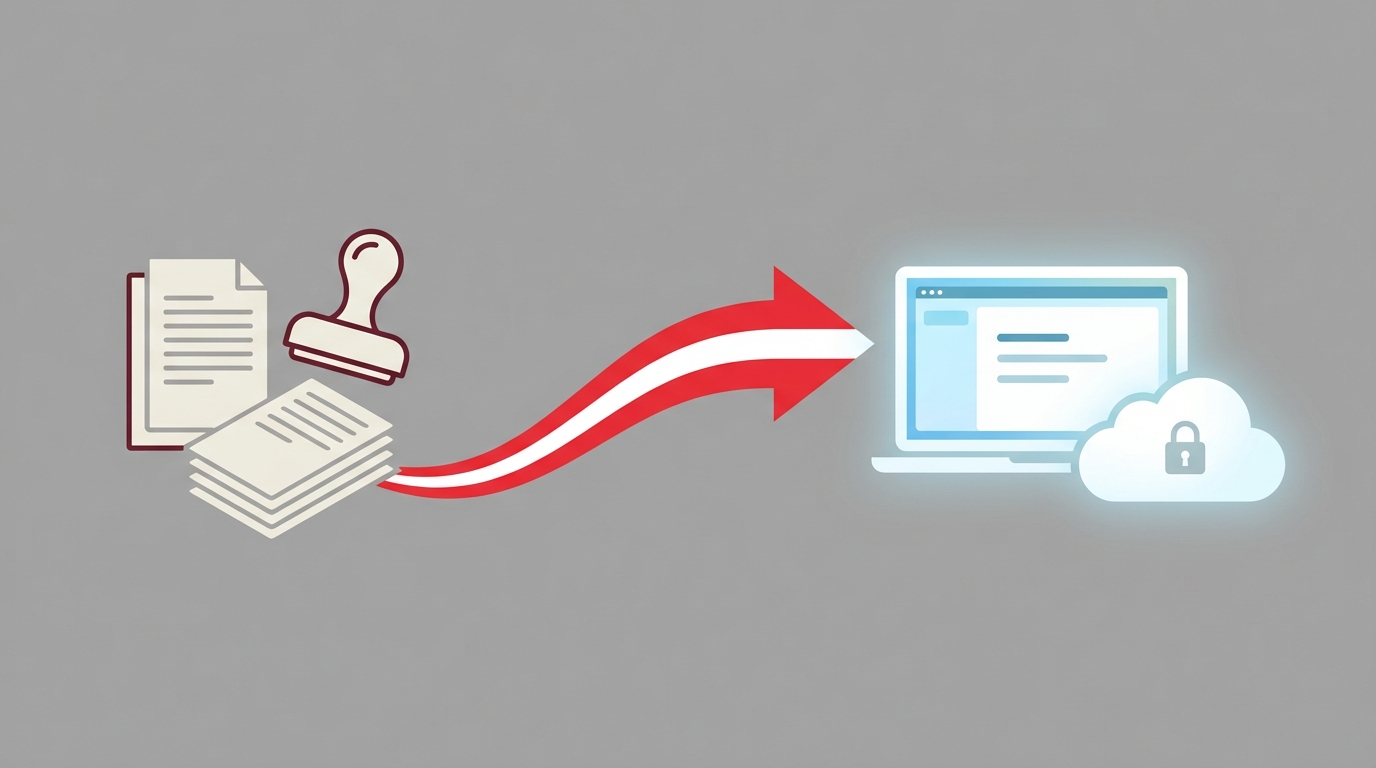
To better understand the impact of Austrian tax digitalisation, the following table contrasts the old, paper-based methods with the new digital framework. This comparison highlights the practical shifts in efficiency, legal interactions, and overall taxpayer experience, clarifying both the advantages and the new responsibilities that come with modernisation.
| Feature | Traditional Tax Process | Digital Tax Process | Key Implications for Taxpayers |
|---|---|---|---|
| Filing Method | Manual completion of paper forms submitted by mail or in person. | Electronic submission via FinanzOnline with pre-filled data from employers and banks. | Benefit: Faster, more convenient, and reduces manual errors. Challenge: Requires digital literacy and consistent access to secure internet. |
| Official Communication | Official notices, assessments, and decisions delivered via postal mail. | Secure electronic delivery to a personal data box; official notices are legally served digitally. | Benefit: Instantaneous delivery and reduced paper clutter. Challenge: Taxpayers must regularly check their online portal to avoid missing critical deadlines. |
| Audit & Review | Often involved on-site visits with manual review of physical documents. | Automated, risk-based analysis of digital data, leading to targeted desk reviews. | Benefit: Less disruptive for businesses; faster resolution for compliant taxpayers. Challenge: The logic behind automated flags can be opaque, demanding clear explanations. |
| Record Keeping | Mandatory physical storage of receipts, invoices, and bank statements for many years. | Digital archiving of financial records is the standard; easier data management. | Benefit: Simple to store, search, and retrieve necessary documents. Challenge: Places a greater emphasis on data security and long-term digital preservation. |
Legal Implications and Evolving Compliance Standards
The transition to a digital tax system in Austria brings significant legal and regulatory changes. These adjustments are not merely procedural; they redefine the fundamental rights and responsibilities of taxpayers. Consequently, both individuals and businesses must adapt to new compliance standards to navigate this landscape successfully. The legal framework now places a greater emphasis on digital interaction, data accuracy, and proactive engagement from the taxpayer.
New Compliance Obligations
Under the digital system, compliance extends beyond simply paying taxes on time. Taxpayers are now legally expected to engage with digital platforms. For instance, the electronic delivery of tax assessments via portals like FinanzOnline is considered legally binding. This means that failing to check for new messages can lead to missed deadlines for appeals, with significant legal consequences. Businesses, in particular, must ensure their digital record keeping meets the standards required by the Austrian tax authorities for electronic audits.
Data Security and Privacy
The centralisation of sensitive financial data raises important questions about security and privacy. The Austrian Ministry of Finance (BMF) is responsible for safeguarding this information against unauthorised access and cyber threats. All data processing must comply with stringent privacy laws, including the EU’s General Data Protection Regulation (GDPR). Taxpayers have the right to know what data is stored and how it is used, especially as automated systems increasingly make decisions based on this information. Therefore, transparent data handling policies are a cornerstone of the legal framework.
The Changing Role of Tax Authorities
The Austrian Tax Administration’s function is also evolving. Instead of relying on manual checks and random audits, the authorities now use sophisticated data analytics to identify irregularities. This risk based approach allows for more efficient enforcement. However, it also creates a legal requirement for the authorities to ensure their algorithms are fair and explainable. The principles of due process remain paramount; taxpayers must be able to understand and challenge any decision made by these automated systems.
Conclusion: Embracing the Digital Future of Taxation
Austrian tax digitalisation represents a pivotal and irreversible shift in how tax compliance is managed. The move from paper-based procedures to integrated digital systems offers undeniable benefits, including increased efficiency, reduced administrative burdens, and faster processing times for taxpayers. However, this transformation also introduces significant new responsibilities. Taxpayers must now navigate a landscape where digital literacy, proactive engagement with online portals, and a clear understanding of electronic communication’s legal weight are essential for successful compliance.
The journey toward a fully digital tax administration is far from over. We can anticipate that future developments will likely involve even greater use of artificial intelligence, more sophisticated data analytics for risk assessment, and enhanced cross-border information sharing. As these technologies evolve, the legal and regulatory frameworks governing them will also continue to adapt. For individuals and businesses alike, staying informed about these changes is not just advisable; it is critical. Proactively managing digital records and seeking expert legal or financial advice when necessary will be key to harnessing the advantages of this new era while safeguarding fundamental rights and ensuring full compliance in an increasingly complex digital world.
Frequently Asked Questions (FAQs)
What is the main advantage of Austrian tax digitalisation for the average taxpayer?
The greatest benefit is the simplification and acceleration of tax filing through pre-filled tax returns. Systems like FinanzOnline automatically populate your return with data from employers, banks, and insurance companies. This reduces manual errors, saves significant time, and often results in faster processing of tax refunds.
Are notices received through my online tax portal legally valid?
Yes, absolutely. Official documents, such as tax assessments and decisions, delivered to your secure electronic data box are legally binding. It is your responsibility to check your portal regularly, because important deadlines, like those for appeals, begin from the moment the document is made available to you electronically.
How is the security and privacy of my financial data ensured?
The Austrian Ministry of Finance (BMF) must adhere to strict data protection laws, including the GDPR. This means implementing strong security measures to protect your data from unauthorized access or cyberattacks. Taxpayers have the right to know how their data is being used, especially in automated decision-making processes.
What should I do if my tax return is flagged by an automated system?
If an algorithm flags your return for review, you have the right to an explanation. The tax authorities must be transparent about why your return was selected. You will have the opportunity to provide additional information or documentation to clarify any discrepancies. The principles of due process ensure you can understand and contest the decision.
Do I still have to keep paper copies of my business receipts and invoices?
While the system is digital, the legal requirement to retain business records for the statutory period (typically seven years) remains. You should maintain secure and organized digital copies of all relevant documents. For certain critical documents, keeping the physical original may still be a prudent measure.
Legal Disclaimer
The information provided here constitutes general and non-binding legal information that makes no claim to be current, complete, or accurate. All non-binding information is provided exclusively as a public and free service and does not establish a client-attorney or consulting relationship. For further information or specific legal advice, please contact our law firm directly.
We therefore assume no guarantee for the topicality, completeness, and correctness of the provided pages and content. Any liability claims relating to damages of a non-material or material nature caused by the publication, use, or non-use of the information presented, or by the publication or use of incorrect or incomplete information, are fundamentally excluded, provided there is no demonstrable willful intent or grossly negligent conduct.
For additional information and contact, please refer to our Legal Notice (Impressum) and Privacy Policy.