
Introduction
Have you ever signed a contract without reading every single line of the fine print? Many people do, relying on trust and standard practice. In Austria, these agreements, known as General Terms and Conditions (AGB), are a fundamental part of commerce for both sales and services. However, these pre-written documents can sometimes contain clauses that create a significant imbalance, heavily favoring one party over the other. This is where the law provides important protections.
Understanding Austrian unfair contract terms is therefore crucial for everyone involved. For consumers, this knowledge is a vital shield, empowering them to identify and challenge provisions that could strip them of their rights. For businesses, on the other hand, ignoring these regulations is a significant risk. Using non-compliant clauses can lead to them being declared void by a court. As a result, this can render key parts of an agreement unenforceable, creating legal uncertainty and potential financial losses.
The legal landscape is constantly evolving. Austrian courts are applying stricter standards, demanding greater transparency and fairness in all pre-formulated contracts. This article provides a clear overview of what constitutes an unfair term under current Austrian law. Furthermore, it offers practical guidance on how to navigate these rules, ensuring your agreements are both legally sound and balanced for all parties.
Legal Framework Governing Austrian Unfair Contract Terms
The regulations surrounding Austrian unfair contract terms are not found in a single piece of legislation. Instead, they are built upon a foundation of national civil law and harmonized European Union directives. The primary goal of this legal framework is to create a fair and transparent contractual environment. It specifically aims to protect the weaker party in an agreement, which is typically the consumer, from imbalanced or surprising clauses in pre-formulated standard contracts (AGB).
Several key laws work together to provide this comprehensive protection. Each plays a distinct role in defining what makes a contract term unfair.
- The Austrian General Civil Code (ABGB): This is the cornerstone of Austrian civil law. The ABGB contains general provisions, such as Section 879, which voids contracts that are contrary to good morals. This principle is often used to challenge grossly disadvantageous terms that create a severe imbalance between the contracting parties. You can find the original text here.
- The Austrian Consumer Protection Act (KSchG): This is the most critical piece of legislation specifically targeting consumer rights. The KSchG includes a “blacklist” of contract clauses that are automatically considered void in consumer contracts, such as unwarranted limitations of liability. It also features a “greylist” of terms that are presumed unfair unless the business can prove they were negotiated in detail and are not disadvantageous.
- The EU Unfair Contract Terms Directive (93/13/EEC): As a member of the EU, Austria’s national laws are heavily influenced by European directives. This directive establishes the minimum standards for protection against unfair clauses in consumer contracts across all member states. It was instrumental in shaping the specific provisions found within the Austrian Consumer Protection Act. The full directive is available on the official EU law portal.
Beyond these specific laws, Austrian courts are also guided by the “transparency principle.” This requires that all contract terms must be clear, intelligible, and written in plain language. Consequently, any ambiguous clause will be interpreted in favor of the consumer. This ensures that consumers can genuinely understand the rights and obligations they are agreeing to.
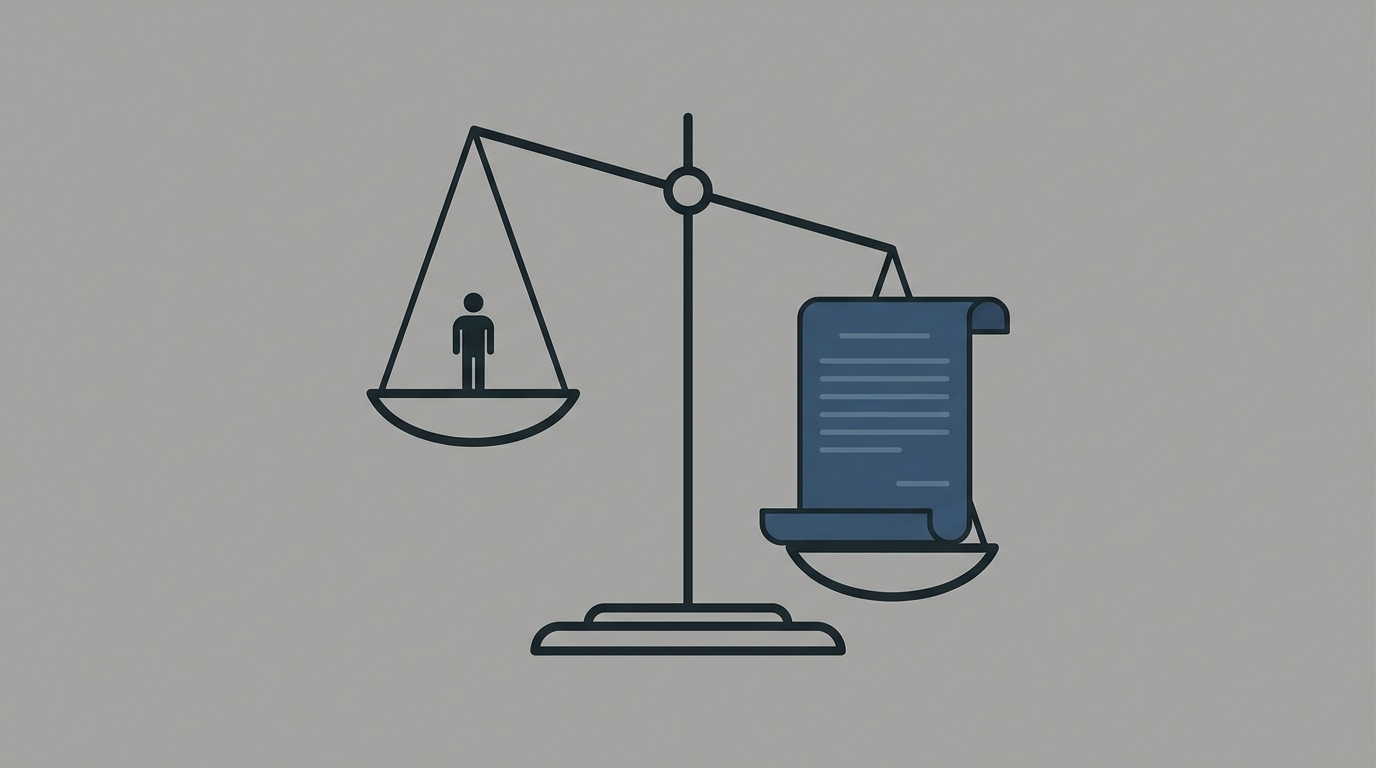
Common Examples of Austrian Unfair Contract Terms
To better understand how these laws work in practice, it is helpful to look at specific examples of clauses that are frequently deemed unfair. Austrian courts have identified several types of provisions in standard contracts that are likely to be unenforceable, especially in consumer agreements. Recognizing these can help both consumers and businesses avoid potential legal disputes over Austrian unfair contract terms.
Here are some of the most common examples:
- Unilateral Changes to the Contract: A business cannot reserve the right to change the price or core features of a service without a valid and transparent reason that is clearly stated in the contract. For instance, a telecommunications provider cannot simply increase a monthly fee at its own discretion. The contract must tie such changes to an objective benchmark, like an official inflation index, and often must also grant the consumer the right to terminate the contract.
- Hidden Automatic Renewals: Many subscription-based services automatically extend for a new term. However, this becomes unfair if the renewal clause is hidden in the fine print or if the notice period for cancellation is unreasonably long. Imagine a one-year software license that requires a cancellation notice six months in advance. A court would likely find this term to be surprisingly disadvantageous to the consumer.
- Excessive Liability Exclusions: While businesses can limit their liability, they cannot exclude it entirely for gross negligence or personal injury. A clause in a gym membership contract stating that the gym is not responsible for any injuries sustained on its premises, even if caused by faulty equipment, would be void. The law ensures that businesses remain accountable for a certain standard of care.
- Unreasonable Jurisdiction Clauses: A contract cannot force a consumer to resolve legal disputes in a court that is far from their place of residence, creating an undue burden. For example, if a customer in Innsbruck buys a product from a Vienna-based online shop, a clause requiring all legal action to take place in Vienna would likely be considered unfair.
| Type of Contract Term | Description | Why It Is Considered Unfair | Legal Consequences |
|---|---|---|---|
| Unilateral Changes | A clause allowing a business to change prices or services without an objective reason specified in the contract. | It creates a significant imbalance by giving one party the power to alter the agreement’s core terms arbitrarily. | The specific clause is declared void. The original contract terms remain in force. |
| Hidden Automatic Renewals | A term that automatically extends a contract, often with a long or difficult cancellation notice period. | This can trap consumers in services they no longer want, especially if the renewal term is not clearly communicated. | The renewal clause is unenforceable, and the consumer can terminate the contract with standard notice. |
| Sweeping Liability Exclusions | A provision that attempts to free the business from responsibility for personal injury, or gross negligence. | It removes fundamental legal protections and unfairly shifts all risk onto the consumer. | The exclusion is void. The business remains liable according to the law. |
| Restrictive Jurisdiction Clauses | A requirement for the consumer to file any legal action in a court that is far from their home. | This creates a significant practical and financial barrier for the consumer to access justice. | The clause is void, and the consumer retains the right to take legal action in their local court. |
Conclusion: Ensuring Fairness in Every Agreement
Navigating the landscape of Austrian unfair contract terms is essential for both individuals and businesses. As this article has shown, the law provides a robust framework, grounded in the Austrian Civil Code and the Consumer Protection Act, to ensure fairness and transparency. The key takeaway is that pre-formulated standard contracts cannot be used to create a significant imbalance at the expense of the weaker party. From unilateral price changes to sweeping liability exclusions, the courts consistently void terms that are not clear, balanced, and equitable.
For consumers, this knowledge is a powerful tool for self-advocacy, helping to identify and challenge unfair provisions. For businesses, on the other hand, proactive compliance is a critical risk management strategy. Ensuring your general terms and conditions are fair and transparent not only prevents clauses from being nullified but also builds trust and reduces the likelihood of costly legal disputes. Ultimately, a well-drafted contract protects everyone involved.
While this overview provides a solid foundation, every situation has unique details. If you are unsure about the terms of a contract or need to draft legally sound agreements for your business, seeking professional guidance is a crucial next step. Contact our team of legal experts for a personalized consultation to ensure your contracts are fully compliant and your interests are protected.
Frequently Asked Questions (FAQs)
What makes a contract term “unfair” in Austria?
A contract term is generally considered one of the Austrian unfair contract terms if it creates a significant, unjustified imbalance in the rights and obligations between the parties, to the detriment of the consumer. The Austrian Consumer Protection Act (KSchG) provides a specific list of clauses that are automatically void (a “blacklist”) and others that are presumed unfair (a “greylist”). Key factors include a lack of transparency, clauses that are surprisingly disadvantageous, or terms that contradict the main purpose of the contract. Essentially, if a pre-written term significantly shifts risk onto the consumer without a clear and fair reason, it is likely to be deemed unfair.
What happens if my contract contains an unfair term?
If a court determines that a specific clause in your contract is unfair, that particular clause becomes void and legally unenforceable. This is a crucial point: the rest of the contract generally remains valid and binding. The invalid term is simply removed, and the gap is filled by the relevant provisions of Austrian statutory law. This ensures that the entire agreement does not collapse just because one part of it was unlawful, thereby protecting the consumer’s interest in the underlying product or service.
Do these rules also protect small businesses?
While the strictest regulations, particularly those in the Austrian Consumer Protection Act (KSchG), are designed for consumer (B2C) contracts, some protections do extend to business-to-business (B2B) agreements. The general provisions of the Austrian Civil Code (ABGB), such as the prohibition of clauses that are contrary to good morals, can be applied to invalidate grossly unfair terms in B2B contracts, especially when one business is much smaller and in a weaker bargaining position. However, the level of protection is generally lower than for consumers.
What should I do if I think a contract clause is unfair?
If you suspect a clause is unfair, you should not simply accept it. The first step is to inform the business in writing that you believe the term is invalid and that you will not comply with it. If the company insists on enforcing it, you can seek help from consumer protection organizations in Austria. For a formal legal challenge, it is highly recommended to consult a lawyer who can assess your specific case and represent you in court if necessary.
Can a company make me agree to any terms by having me sign the contract?
No, your signature does not validate an illegal or unfair contract term. Austrian law operates on the principle that fundamental consumer protections cannot be waived in a standard form contract. Even if you have signed the agreement, any clause that falls under the category of Austrian unfair contract terms as defined by law is still void. The law presumes an imbalance of power in these situations and protects the consumer from being bound by grossly disadvantageous fine print, regardless of their signature.
The information provided here constitutes general and non-binding legal information that makes no claim to be current, complete, or accurate. All non-binding information is provided exclusively as a public and free service and does not establish a client-attorney or consulting relationship. For further information or specific legal advice, please contact our law firm directly. We therefore assume no guarantee for the topicality, completeness, and correctness of the provided pages and content.
Any liability claims relating to damages of a non-material or material nature caused by the publication, use, or non-use of the information presented, or by the publication or use of incorrect or incomplete information, are fundamentally excluded, provided there is no demonstrable willful intent or grossly negligent conduct. For additional information and contact, please refer to our Legal Notice (Impressum) and Privacy Policy.