
DMA national enforcement fragmentation: Navigating cross-border enforcement risks under the Digital Markets Act
DMA national enforcement fragmentation poses urgent questions for legal teams and digital gatekeepers. The Digital Markets Act aims for harmonisation, yet Member State measures risk creating divergent enforcement paths. For example, the Autorita’ Garante della Concorrenza (AGCM) pursued a Google case that invoked consumer protection and intersected with Article 5(2) DMA.
Moreover, national courts like the German Federal Court of Justice have issued pivotal rulings that affect market practice. As a result, firms face parallel risks from national enforcement and Commission action under Article 37(7) DMA. The European Commission retains sole DMA enforcement, but Member States can still deploy adjacent regimes under national law.
Consequently, questions arise about the interplay with Article 1(5) DMA and Article 258 TFEU remedies against non-compliant states. Therefore, compliance teams must track developments in the European Competition Network and in consumer protection cooperation. This introduction outlines the importance, legal complexity and practical stakes of DMA national enforcement fragmentation. It sets the scene for a deeper analysis of coordination mechanisms, merger-control precedents and strategic compliance for gatekeepers.
What is DMA national enforcement fragmentation?
DMA national enforcement fragmentation describes diverging enforcement paths by Member States under or alongside the Digital Markets Act. It arises when national authorities apply adjacent regimes, such as consumer protection law, data protection rules or competition law. As a result, gatekeepers face inconsistent obligations across jurisdictions. This fragmentation undermines the DMA’s goal of harmonisation in the internal market, as set out in Article 1(1) DMA. For official text and context, see the DMA on EUR-Lex: DMA on EUR-Lex and the European Commission’s DMA page: European Commission’s DMA page.
How DMA national enforcement fragmentation affects national enforcement mechanisms
Fragmentation changes how national enforcers act and cooperate. For example, the Autorita’ Garante della Concorrenza (AGCM) used consumer protection law in the Google case PS12714. Moreover, German Federal Court of Justice rulings, such as in Amazon and Apple matters, influence national practice. Consequently, enforcement can become parallel, overlapping or even conflicting with Commission action under Article 37(7) DMA.
Key issues caused by fragmentation
- Legal uncertainty for gatekeepers, because rules vary by Member State.
- Risk of double enforcement, because national authorities and the Commission may pursue similar claims.
- Forum shopping by complainants, because they may seek favourable national regimes.
- Patchwork remedies, because outcomes may differ across courts and agencies.
- Compliance cost increases, because firms must manage multiple regimes.
Practical implications and examples
National networks matter, such as the European Competition Network and the Consumer Protection Cooperation Network. National enforcement can trigger Article 258 TFEU action if Member States fail to follow EU law. Therefore, legal teams should monitor national rulings, AGCM decisions and Commission guidance closely. Related search terms include Digital Markets Act, gatekeepers, harmonisation, regulatory fragmentation and national enforcement.
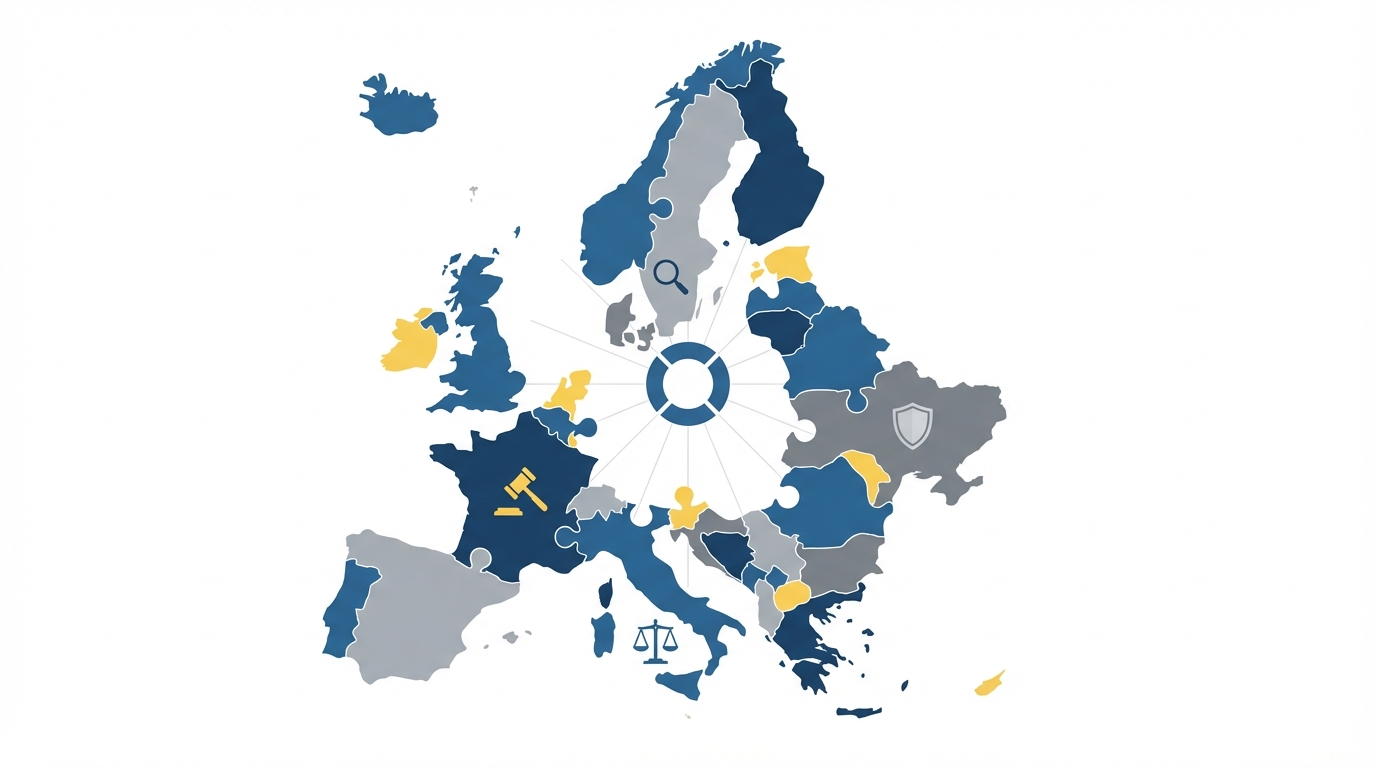
Legal implications of DMA national enforcement fragmentation
DMA national enforcement fragmentation raises direct legal tensions between EU harmonisation and national autonomy. The Digital Markets Act gives the Commission sole DMA enforcement powers under Article 37(7). However, Member States may still use adjacent national regimes. For statutory context see the DMA text on EUR-Lex and the Commission’s DMA overview: Digital Markets Act Overview.
National actions can create conflicting legal standards. For example, the Autorita’ Garante della Concorrenza (AGCM) used consumer protection law in Case PS12714 involving Google. Observers flagged that the AGCM commitments align with Article 5(2) DMA principles. For commentary on this development, see the Kluwer analysis.
Consequences include:
- Fragmented legal duties, because gatekeepers may face divergent national obligations.
- Risk of conflicting judgments, because courts can interpret overlapping rules differently.
- Enforcement displacement, because national enforcers may pursue issues the Commission deems DMA matters.
Administrative and practical challenges from DMA national enforcement fragmentation
Regulatory fragmentation imposes heavy administrative burdens. Compliance teams must map national rules and parallel investigations. Consequently, costs rise and legal strategy becomes complex.
Operational effects include:
- Duplication of processes, because firms must respond to several authorities at once.
- Increased litigation risk, because companies may face enforcement in multiple fora.
- Forum shopping, because complainants may file where rules favour their claims.
- Timing mismatches, because national procedures can be faster or slower than EU processes.
Experts warn that fragmentation will persist short term. As one observer put it: “The key question is not whether national authorities will test the limits of the DMA, but how quickly clear guardrails will be set around the use of adjacent national regimes to enforce the DMA through the backdoor.” Therefore, legal teams should monitor national rulings, AGCM decisions and Commission guidance closely. Effective coordination through networks such as the European Competition Network will be crucial to reduce practical friction and align enforcement outcomes.
Comparative table of DMA enforcement fragmentation across Member States
This comparative table highlights enforcement frameworks across key Member States. It focuses on fragmentation levels, strengths and weaknesses. Therefore, readers can gauge national risks quickly.
| Country | Enforcement Authority | Fragmentation Level | Challenges |
|---|---|---|---|
| Germany | Bundeskartellamt; Federal Court of Justice influence | Medium-high | Parallel enforcement with EU rules; case law can diverge |
| Italy | Autorita’ Garante della Concorrenza (AGCM) | High | Uses adjacent regimes like consumer protection; example Google PS12714 |
| France | Autorité de la concurrence; DGCCRF for consumer issues | Medium | Coordinated approach but possible overlaps with consumer law |
| Spain | CNMC; National consumer authority | Medium | Occasional parallel actions; timing mismatches with Commission |
| Romania | Consiliul Concurenței; National Consumer Protection Authority (ANPC) | High | Limited resources; potential for inconsistent application |
Levels are indicative and reflect fragmentation aspects, not legal certainty.
Conclusion: DMA national enforcement fragmentation — summary and next steps
DMA national enforcement fragmentation presents legal and practical risks for gatekeepers and policymakers. It creates divergent obligations across Member States and raises the chance of parallel enforcement. Therefore, compliance teams must map national regimes and monitor national case law closely. AGCM’s Google PS12714 shows national enforcement using consumer law. German Federal Court rulings on Amazon and Apple also shape market practice.
Moreover, fragmentation increases costs and litigation risk. Consequently, firms should build coordinated response plans. They should also engage with networks like the European Competition Network to support alignment. At the same time, the European Commission can use Article 258 TFEU to address Member State non-compliance. This option provides a legal backstop that can restore uniformity.
Looking ahead, clearer guardrails and stronger coordination will reduce fragmentation. Regulators should clarify the use of adjacent national regimes and improve information sharing. In the meantime, legal advisers should offer pragmatic, jurisdiction-specific advice. For practitioners, the payoff is clear: proactive monitoring and cross-border coordination will limit exposure and protect business operations.
Frequently Asked Questions (FAQs)
What is DMA national enforcement fragmentation?
DMA national enforcement fragmentation means Member States apply different enforcement approaches alongside the Digital Markets Act. For example, some authorities use consumer protection or data protection law to target gatekeepers. The Autorita’ Garante della Concorrenza (AGCM) pursued Case PS12714 against Google using consumer rules. However, the DMA sets the European Commission as the primary DMA enforcer under Article 37(7). As a result, fragmentation creates uneven obligations for firms across the internal market.
Can national authorities still act if the Commission enforces the DMA?
Yes, national authorities can act using adjacent national regimes. Article 1(5) DMA forbids extra DMA obligations, yet it does not bar national consumer or data regulators from enforcing their laws. For example, the AGCM required Google to adjust consent flows and reference Article 5(2) DMA. Therefore, national enforcement can run parallel to Commission activity. If Member States breach EU law, the Commission may invoke Article 258 TFEU.
What practical risks does fragmentation pose for gatekeepers?
Fragmentation raises several concrete risks:
- Double enforcement, because different authorities may investigate the same conduct.
- Inconsistent remedies, since outcomes can vary between jurisdictions.
- Forum shopping, because complainants may pick favourable national routes.
- Higher compliance costs, because firms must track multiple rules.
- Strategic uncertainty, as case law from courts like Germany’s Federal Court can shift expectations.
Consequently, firms face greater operational and legal complexity.
How should companies respond to DMA national enforcement fragmentation?
Companies should act proactively. First, map national regimes and likely enforcing authorities. Second, set cross-functional teams for quick responses. Third, monitor key decisions such as AGCM and German Federal Court rulings. Fourth, engage with the European Competition Network and national regulators when feasible. Finally, align privacy, competition and compliance policies to reduce fragmentation risk.
What steps could reduce fragmentation going forward?
Improved EU coordination will help. For instance, clearer guidance from the Commission on Articles 37 to 40 DMA would limit overlaps. Moreover, stronger information sharing across the European Competition Network could harmonise outcomes. If disputes persist, the Court of Justice may clarify boundaries. In short, better rules and cooperation will reduce DMA national enforcement fragmentation over time.
The information provided here constitutes general and non-binding legal information that makes no claim to be current, complete, or accurate. All non-binding information is provided exclusively as a public and free service and does not establish a client-attorney or consulting relationship. For further information or specific legal advice, please contact our law firm directly. We therefore assume no guarantee for the topicality, completeness, and correctness of the provided pages and content.
Any liability claims relating to damages of a non-material or material nature caused by the publication, use, or non-use of the information presented, or by the publication or use of incorrect or incomplete information, are fundamentally excluded, provided there is no demonstrable willful intent or grossly negligent conduct.
For additional information and contact, please refer to our Legal Notice (Impressum) and Privacy Policy.